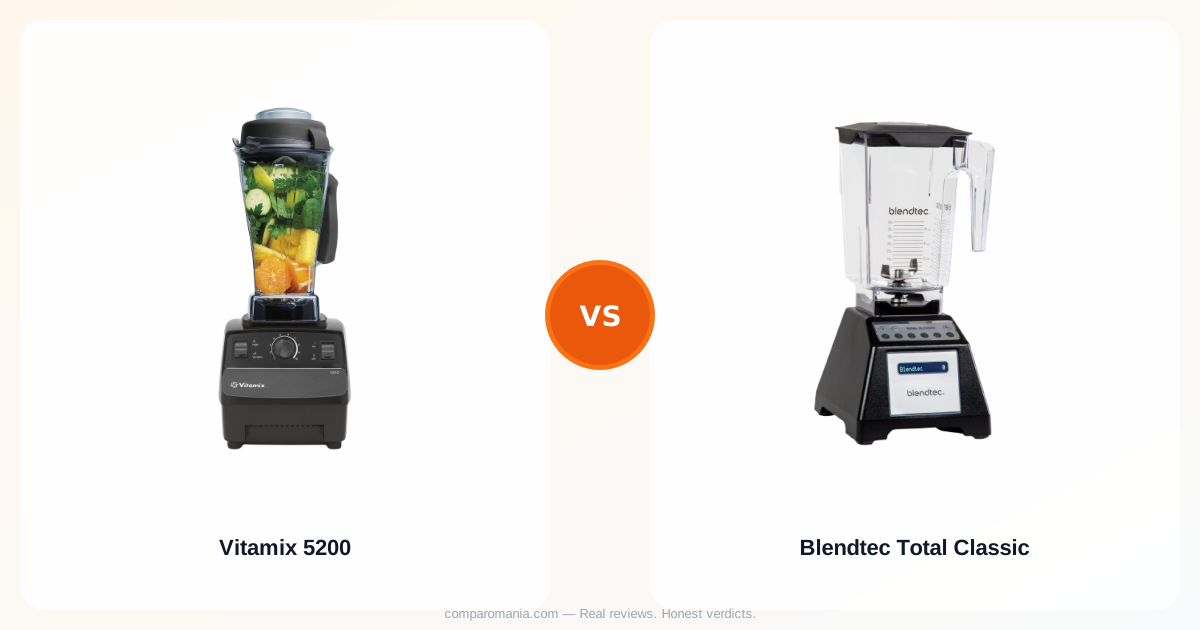
You're standing in front of a $400-plus decision, and both brand websites are telling you the same story: powerful motor, smooth results, built to last. The Vitamix 5200 and the Blendtec Total Classic have been competing for the same counter space for years. Both are genuinely excellent machines. The problem is they're excellent in different ways, and which way matters depends entirely on how you actually cook.
What you're actually paying for
The Vitamix 5200 runs around $430 on Amazon as of mid-2026. The Blendtec Total Classic with the WildSide+ jar sits at roughly $400 on Walmart, making it technically cheaper, but the gap is close enough that price alone shouldn't move the needle. Certified reconditioned versions of both are worth knowing about: Vitamix reconditioned units start at around $290, and Blendtec's certified refurbished Total Blender has been available for around $280. If you're budget-conscious, that's the smarter entry point for either brand.
On paper, the Blendtec punches harder. Its motor peaks at 3 horsepower on the Total Classic versus the Vitamix 5200's 2 horsepower. The Blendtec also runs at up to 29,000 RPM and packs 1,560 watts. Those numbers sound decisive. In the blender you actually use daily, they're less important than the vortex design and blade geometry, which is where the Vitamix starts earning its reputation back.
The blending results that actually separate them
The Vitamix 5200's tall, narrow 64-ounce container creates a strong downward vortex that pulls ingredients continuously toward the blade. For thick, fibrous blends, kale smoothies, nut butters, dense soups, owners consistently report results that feel more thoroughly processed. The tamper is part of this story. It reaches into the container while the lid is on, letting you push stuck ingredients into the blade without stopping the machine. Nut butter in under two minutes is a real thing with this setup.
The Blendtec uses a wide, squared-off jar with blunt two-pronged blades rather than the traditional four-blade sharp design. The geometry is different enough that it creates friction heat through blade contact rather than vortex speed, which works beautifully for smoothies and hummus, but testers at TechGearLab found the blunt blade and squared jar didn't generate enough friction to heat soup as quickly as Blendtec claims. For smoothies, though, the 60-second Smoothie preset produces genuinely uniform results without any manual input.
For small batches, a single-serve smoothie, a half-cup of pesto, the Vitamix's narrower container handles them better. The Blendtec's wide jar struggles to catch small volumes efficiently. That's a real limitation for solo users.
The honest truth about these blenders nobody says clearly
Both brands market longevity as a core promise. And both deliver, eventually. But the Blendtec Total Classic has more variance in owner experience than its reputation suggests. Some owners report units still running after 15 years of daily use. Others hit motor failure at 250 uses and describe it as a profound disappointment given the price. The Vitamix 5200, with five years of documented commercial restaurant use at high daily volume, has a notably more consistent track record in public owner reports. This is a structural observation: the Blendtec Total Classic is a good blender that occasionally fails early, and the 8-year warranty covers you when it does, but the Vitamix 5200 fails less often in the first place.
Design and physical reality
The Vitamix 5200 is 20.5 inches tall and weighs around 10.5 pounds without the jar, around 13 pounds total. That height is the main practical problem. If your kitchen has low cabinets, it won't fit underneath them, you'll need to store it elsewhere or leave it on the counter permanently. The build itself is dense and heavy enough that it doesn't shift during heavy blending.
The Blendtec Total Classic is 15 inches tall and weighs 7.28 pounds. It fits under standard kitchen cabinets. The flat sealed faceplate has no crevices for food residue to accumulate, the touchpad controls wipe clean with a damp cloth. The Vitamix's switch and dial interface has slightly more geometry for grime to collect in, though owners generally say this isn't a serious maintenance issue. The Blendtec's wide-mouth jar is easier to clean by hand. The Vitamix 5200's container is not dishwasher-safe; both support the self-cleaning method of warm water and dish soap blended for 30 seconds.
One thing the Blendtec does less well physically: on very heavy loads with frozen ingredients, the lighter chassis can shift on the counter, particularly on uneven or textured surfaces. A rubber mat solves it, but it's something Vitamix owners never have to think about.
Controls and how they shape your cooking
The Vitamix 5200 has a 10-speed variable dial plus an on/off switch and a pulse function. No presets. You watch the blend, adjust the speed, use the tamper when needed. There's a learning curve, but experienced cooks tend to prefer it, the precise control over texture is real, not marketing language. Coarse salsa and silky soup require different approaches, and the dial gives you both.
The Blendtec Total Classic has 10 manual speeds plus 6 pre-programmed cycles: smoothie, ice cream, hot soup, whole juice, batters, and a cleaning cycle. You press a button, walk away, and come back to a finished blend. For households where multiple people use the blender with different skill levels, the presets remove friction entirely.
Neither approach is objectively better. The real question is whether you want control or convenience. Households where the blender is used by one detail-oriented cook lean toward the Vitamix. Households where multiple people use it daily lean toward the Blendtec.
Warranty and long-term ownership costs
Blendtec covers the Total Classic for 8 years. Vitamix covers the 5200 for 7 years. The Blendtec warranty is longer, and it matters more given the occasional early-failure reports above.
Both brands sell replacement jars and accessories separately, so neither locks you out of the ecosystem if a component wears out. Vitamix replacement containers run roughly $100-plus depending on size. Blendtec replacement jars sit in a similar range. The Vitamix blade assembly is replaceable; the Blendtec blade is permanently integrated into the jar, meaning a blade problem requires replacing the entire jar rather than just the blade.
Long-term, the Vitamix 5200's track record of lasting 10-15 years under regular home use, and verified commercial durability over five years of daily restaurant volume, makes the $430 entry price sit more comfortably. The Blendtec is a good bet. The Vitamix is a safer one.