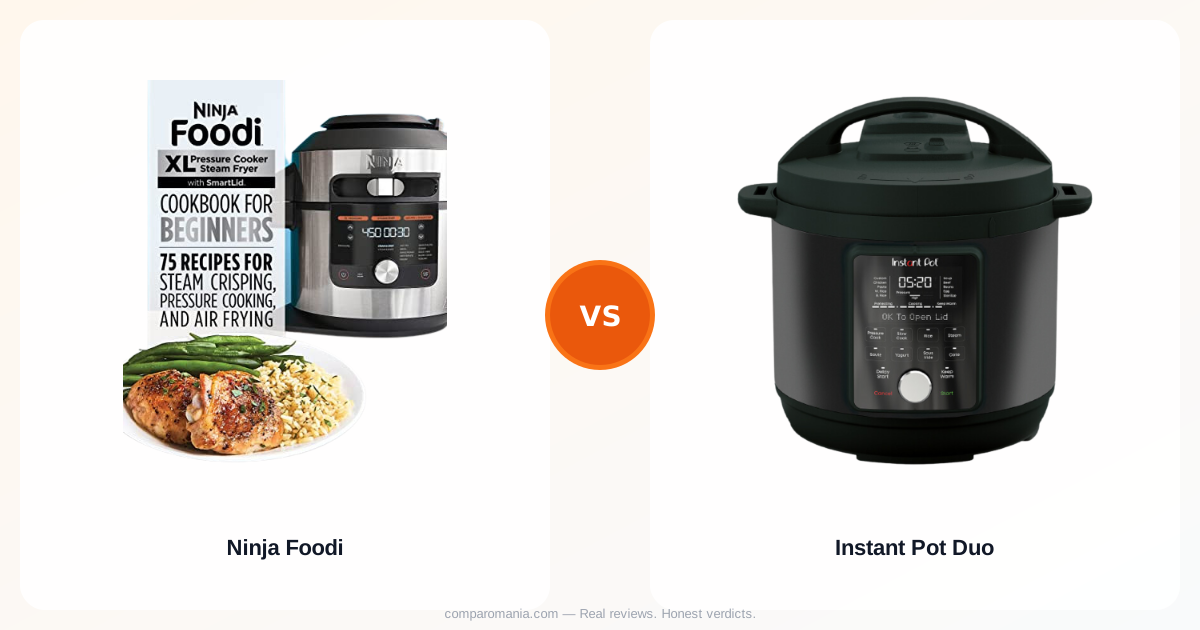
You've got one counter slot left. Maybe you're replacing a slow cooker that finally died, or you're moving into a smaller place and you can't justify three appliances. Either way, you've landed on these two, and the brand pages aren't helping, they both claim to do everything.
They don't both do everything equally well. Here's what the numbers and owner feedback actually say.
The price gap isn't what it looks like at first
The standard Instant Pot Duo starts at $79–$99. But it does not include air frying. That entry price is real, but it only gets you pressure cooking, slow cooking, rice, steaming, sautéing, yogurt making, and warming. The Ninja Foodi Deluxe 6.5qt sits at $149–$199, and frequently goes on sale for $129.
Once you add air frying to the comparison, the Instant Pot Duo Crisp and Ninja Foodi entry models land in the same price range. The value gap closes completely at that tier. So if you're comparing the base Duo against the Foodi, you're not comparing like for like, you're comparing a pressure cooker against a pressure cooker plus air fryer. The $50–$70 difference between the Duo Crisp and the Foodi Deluxe is the honest starting point for this decision.
In the UK, the Ninja Foodi Max 15-in-1 SmartLid runs around £249–£299 depending on retailer and timing. Instant Pot pricing in Europe varies, but the standard Duo tends to sit at £70–£90.
Pressure cooking is not a tie
Testing shows the Instant Pot Duo produces consistently fluffy rice with no sticking and tender beans with intact skins, pressure mode is where the Duo shines for speed and consistent texture, and the safety and predictable sealing make repeated runs low-stress.
The Ninja Foodi matches it on most moist-heat results, but the two machines were built to solve different problems: the Instant Pot is a pressure cooker that learned to slow-cook and sous vide, while the Ninja Foodi is a pressure cooker that also air fries. That origin shapes everything. The Foodi's pressure performance is solid, nobody's complaining about undercooked food, but the Duo's single-function focus means its pressure system is more refined, and Instant Pot's design has been refined through millions of units and countless user feedback, with a build quality that feels substantial: heavy base, robust sealing ring, intuitive control panel.
The original Instant Pot Duo combined six functions, pressure cooker, slow cooker, rice cooker, steamer, sauté pan, and food warmer, and that core design has been iterated on for over a decade. The Foodi launched in 2018 and split its engineering attention between two different lid systems from the start.
Air frying is where Ninja actually earns its price
Ninja launched the Foodi in 2018 with one clear differentiator: a detachable air fryer lid that works alongside the pressure cooker lid. You can pressure cook a whole chicken until it is fall-off-the-bone tender, then switch lids and air fry it for eight minutes to crisp the skin, all in one pot.
That workflow is genuinely useful. If air frying is your top priority, wings, fries, frozen foods multiple times per week, Ninja's superior air fryer performance justifies the extra cost. The Foodi's TenderCrisp Technology isn't marketing; the air-fry basket is larger and purpose-built, with a 4-quart Cook and Crisp basket that can handle a 6lb chicken.
The Duo Crisp attempts to add air frying functionality, but it's essentially playing catch-up to Ninja's established design. The air frying performance of Instant Pot's dual-function models is adequate but not exceptional, if air frying matters to you, Ninja maintains a significant advantage.
The thing nobody mentions when comparing these two
Here's the structural observation: the sealing ring problem is not a quirk, it's a design reality baked into every pressure cooker in this category, and both machines have it. Strong-smelling dishes permanently alter the scent of silicone sealing rings. Cook a fish curry on Monday and your Tuesday cheesecake will carry a faint reminder of it. Both brands sell proprietary rings. Replacement rings cost $8–$15 each, and buying a two-pack at initial purchase is standard advice from experienced owners.
The reason this matters more than people expect: the practical solution is keeping two or three spare rings, one for savory meals, one for sweet desserts and dairy-based recipes, and one as a backup. That's a recurring cost and a recurring chore that neither brand mentions prominently. It doesn't make either machine worse. But it means your $79 Instant Pot becomes an $87–$94 Instant Pot within the first month if you cook varied food.
The Ninja Foodi has the same issue, and adds a second lid with more surface area to keep clean.
Design and cleaning: one lid versus two
Instant Pot's single lid is easier to clean than Ninja's two lids. Ninja's air fryer lid has more crevices that trap grease. That difference accumulates over months of real use. The Instant Pot's stainless steel inner pot is dishwasher-safe, doesn't retain smells, and the overall clean-up routine is faster.
Both machines are solidly built. Both feel solid and well-built, Instant Pot's buttons and controls feel slightly more premium, but Ninja's larger lid hinge and air fryer basket are sturdier. Footprint matters too. The Ninja Foodi Deluxe runs 16.1 inches long by 14.6 inches wide by 14.3 inches tall, and weighs 26 pounds. The standard Instant Pot Duo 6qt is lighter and narrower. If your counter space is genuinely tight, that difference is not trivial.
After extended testing, the Instant Pot shows minimal wear, the heating element remains consistent, the sealing ring maintains its seal, and the control panel responds reliably. Long-term durability data on the Foodi is harder to isolate because so many users are running the air fry and pressure cook functions differently.
The recipe ecosystem is not a small thing
The Instant Pot built the largest community of any kitchen appliance. Millions of user-generated recipes, Facebook groups, and dedicated cookbooks exist solely for this machine, and that ecosystem adds real value for new owners. When something goes wrong, or you're not sure how to adapt a recipe, the answer already exists somewhere in that community.
Ninja's recipe support has improved, and the Foodi has its own following. But Instant Pot has the longer track record and better recipe ecosystem. That gap matters most in your first three months of ownership, when you're still figuring out timing and pressure levels. It narrows if you're an experienced pressure cooker user who doesn't need hand-holding.
For newer cooks, the Duo's community is a real advantage. For someone who already knows their way around a pressure cooker and wants to consolidate two appliances into one, the Foodi's smaller recipe library is less of a problem.
Who actually should buy each one
Buy the Instant Pot Duo if you already have an air fryer, or you don't want one. Cleaner pressure cooking, smaller footprint. At $79–$99 it is genuinely hard to argue against for what it does. The stainless steel inner pot, the safety record, the community, it is the most proven appliance in this category.
Buy the Ninja Foodi if you don't have an air fryer and don't want two separate devices. One machine, both jobs. The $149–$199 price is justified if you're genuinely replacing two appliances, not adding a third. Generally, the Foodi Deluxe costs anywhere from 50% to 100% more than a standard Instant Pot Duo of similar capacity, which only makes sense if the air frying function gets used regularly.
The decision becomes simpler when you're honest about one thing: how often will you actually air fry? If the answer is twice a week or more, the Foodi earns its price difference. If the answer is occasionally, the Duo Crisp at $99–$149 gives you air frying capability without overpaying for Ninja's more refined basket design.