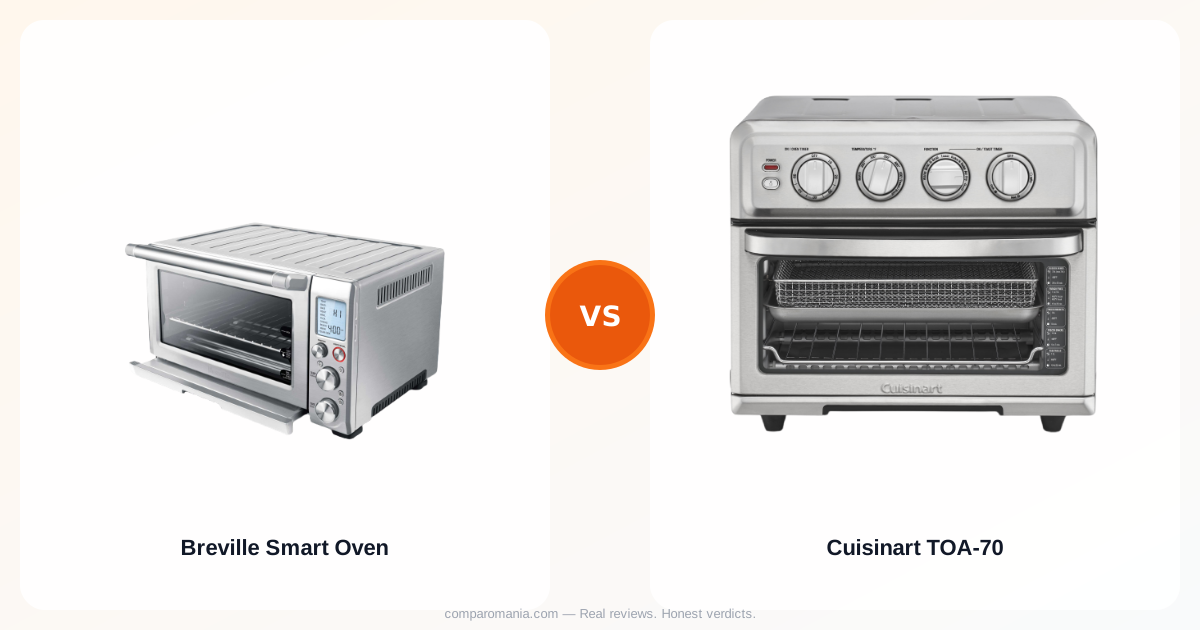
Your countertop looks cramped with both a toaster and a separate convection oven taking up prime real estate. One good toaster oven should replace both, but choosing between Breville's Smart Oven Pro and Cuisinart's TOA-70 means deciding what you're actually willing to pay for.
Both promise to toast, bake, broil, and air fry. The Breville costs around $300. The Cuisinart runs about $200. That $100 gap matters when you're buying an appliance that might sit on your counter for the next decade.
Size difference hits immediately
The Breville measures 18.5 x 15.7 x 11.1 inches. The Cuisinart: 15.5 x 16 x 14 inches. Numbers don't tell the story — the Breville spreads wider but sits lower. The Cuisinart stands taller but takes up less length.
Most people notice the Breville's footprint first. It claims more counter space but fits under standard cabinets better. The Cuisinart's height becomes the issue — 14 inches won't clear lower cabinets in many kitchens.
Inside capacity tells a different story. The Breville fits six slices of toast or a 12-inch pizza. The Cuisinart handles six slices but maxes out at 11-inch pizzas. That one inch costs you frozen pizza options.
Build quality separates them clearly
The Breville's door opens with a solid thunk. No wobble, no flex. The interior walls are thick stainless steel. The wire racks slide smoothly on metal guides. Everything feels deliberate.
Cuisinart's door feels lighter, opens with more give. The interior is stainless steel too, but thinner gauge. The racks work fine but slide with less precision. Not cheap, just not as substantial.
The control differences matter daily. Breville uses a large LCD screen with preset programs that actually work. Turn the dial, press a button, walk away. The Cuisinart relies on physical dials for temperature and time. More manual but also more reliable long-term.
Cooking performance shows the price gap
Breville's Element IQ system distributes heat more evenly. Five quartz heating elements adjust power automatically. Toast comes out consistent across all six slices. Cookies bake evenly without rotating the pan halfway through.
The Cuisinart uses four elements in a simpler configuration. Heat distribution works but requires more attention. You'll rotate pans, flip food, adjust timing based on experience. Not worse cooking — just more hands-on.
The thing manufacturers don't tell you: both ovens run hot compared to their displayed temperatures. The Breville typically runs 10-15 degrees high. The Cuisinart can be off by 20-25 degrees. You'll learn to compensate, but the Breville's variance is smaller and more predictable.
Air frying in both units works better than expected but worse than dedicated air fryers. The baskets are too small for family portions. Four chicken thighs max, and even then you're crowding them.
Durability patterns emerge after two years
Breville units develop issues around the three-year mark. Usually the door mechanism or LCD screen. The heating elements themselves hold up well. Replacement parts cost more but stay available longer.
Cuisinart problems show up earlier but cost less to fix. The timer dial is the weak point — starts sticking after 18 months of regular use. The heating elements occasionally fail around year two. Parts are cheaper and more widely available.
Both brands honor their warranties, but Breville's customer service responds faster. Cuisinart takes longer but ultimately resolves issues.
Daily use reveals the real differences
Cleaning the Breville takes more time. The interior light helps you see what needs attention, but the deeper cavity means more reaching. The crumb tray slides out cleanly but doesn't catch everything.
The Cuisinart's shallow design makes wiping down easier. No interior light, but you can see everything without leaning in. The crumb tray catches more debris but doesn't slide as smoothly.
Noise levels vary by function. Both are quiet during baking and toasting. The convection fans run louder on the Cuisinart — noticeable if you're cooking while others are watching TV nearby. The Breville's fan runs consistently quieter.
Preheating times favor the Breville slightly. It reaches 350°F about 30 seconds faster than the Cuisinart. Not dramatic, but it adds up over daily use.
Price justification comes down to frequency
The $100 difference buys you better build quality, more even heating, and a more refined experience. If you're using this daily — toast every morning, reheating leftovers, baking cookies — the Breville's advantages compound.
For occasional use, the Cuisinart delivers 90% of the performance at 67% of the cost. The manual controls might actually outlast the Breville's electronics.
Neither unit replaces a full-size oven for serious baking or large meals. Both work best as daily workhorses for smaller portions and quick tasks.